
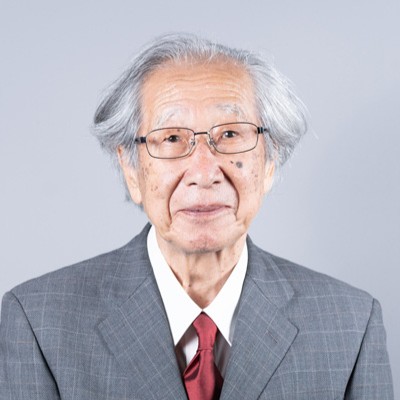
Prof. Shun-Ichi Amari
Life IEEE Fellow | Kyoto Prize Laureate 2025
Former Director, RIKEN Brain Science Institute (BSI), Japan
Pioneer of Information Geometry and Neural Networks
Keynote Talk: AI and Civilization
Humanity has developed two intelligent systems: the biological brain and artificial intelligence (AI). The brain is the product of a long evolutionary history, whereas AI has been created by drawing inspiration from the brain and leveraging modern computer technology. The brain gives rise to the mind, including consciousness, which has played a fundamental role in the survival and development of human societies. In contrast, current AI systems do not possess consciousness or the functions associated with it. This talk reviews the histories and characteristics of these two forms of intelligence.
AI has already become an indispensable tool in modern society and continues to advance rapidly. At the same time, its development presents significant risks that could threaten the stability of human civilization if left unmanaged. We examine both the promise and the potential dangers of AI, discussing its transformative benefits as well as the challenges it may pose for the future of civilization.
Prof. Shun-Ichi Amari is widely recognized as a pioneer in information geometry, neural networks, and theoretical machine learning. He is a Life IEEE Fellow, Kyoto Prize Laureate, Professor Emeritus of the University of Tokyo, and Honorary Science Advisor at RIKEN, Japan.
Prof. Amari has made fundamental contributions to the theoretical foundations of artificial intelligence, including neural network learning theory, natural gradient learning, blind source separation, self-organizing systems, and the development of information geometry as an interdisciplinary framework connecting differential geometry, statistics, and machine learning. His work has had a profound impact on modern artificial intelligence, deep learning, optimization theory, signal processing, and computational neuroscience.
Throughout his distinguished career, he served as Professor at the University of Tokyo and as former Director of the RIKEN Brain Science Institute. He has received numerous prestigious honors, including the IEEE Neural Networks Pioneer Award, the IEEE Emanuel R. Piore Award, the Japan Academy Prize, and the Kyoto Prize in Advanced Technology (2025). His pioneering contributions continue to shape the foundations of artificial intelligence and mathematical neuroscience worldwide.

Prof. Andrzej Cichocki
IEEE Fellow
Senior Visiting Researcher, RIKEN Center for Advanced Intelligence Project (AIP), Japan
Professor, Systems Research Institute, Polish Academy of Sciences, Poland
Prof. Andrzej Cichocki is a Polish electrical engineer and computer scientist recognized for his pioneering contributions to artificial intelligence, blind source separation, tensor networks, and brain-computer interfaces. He is a Full Professor at the Systems Research Institute of the Polish Academy of Sciences, a Professor at Nicolaus Copernicus University, and a Senior Visiting Researcher at RIKEN AIP, Japan.
His research focuses on machine learning, independent component analysis, non-negative matrix factorization, tensor decomposition methods, and biomedical signal processing, with applications in neuroscience and brain disease diagnosis. He has authored over 800 publications and is widely cited in computational intelligence and signal processing.
Prof. Cichocki is an IEEE Fellow (2013) and a Clarivate Highly Cited Researcher (2021–2023). He received an honorary doctorate from Nicolaus Copernicus University in 2017 and is internationally recognized for his contributions to modern machine learning and computational neuroscience.
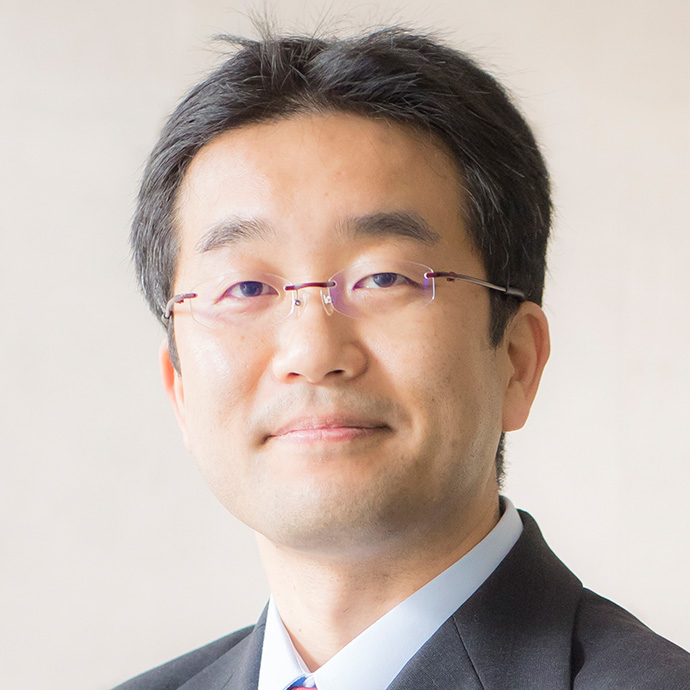
Prof. Masashi Sugiyama
Director, RIKEN Center for Advanced Intelligence Project (AIP), Japan
Professor, The University of Tokyo, Japan
Keynote Talk: Foundations of Robust Machine Learning under Imperfect Supervision
In modern machine learning, acquiring vast amounts of high-quality labeled data is increasingly difficult and costly. While leveraging unlabeled data offers a potential alternative, it often lacks the necessary reliability for mission-critical applications. To bridge this gap, learning from "imperfect" supervision has emerged as a highly promising frontier. In this talk, I will review our recent advancements in developing robust frameworks for learning from imperfect supervision, focusing on weakly supervised learning, noisy label learning, and transfer learning. I will conclude by discussing the strategic evolution of machine learning research in the transformative era of large foundation models.
Masashi Sugiyama was born in Osaka, Japan, in 1974. He received a Bachelor of Engineering, Master of Engineering, and Doctor of Engineering in Computer Science from Tokyo Institute of Technology, Japan, in 1997, 1999, and 2001. In 2001, he was appointed Assistant Professor in the same institute, and he was promoted to Associate Professor in 2003. He moved to the University of Tokyo as Professor in 2014. Since 2016, he has concurrently served as Director of the RIKEN Center for Advanced Intelligence Project, leading the groups of fundamental AI technologies, AI applications, and social issues of AI. He received an Alexander von Humboldt Foundation Research Fellowship and researched at Fraunhofer Institute, Berlin, Germany, from 2003 to 2004. In 2006, he received European Commission Program Erasmus Mundus Scholarship and researched at the University of Edinburgh, Edinburgh, UK.
His research interests include theories and algorithms of machine learning and statistical data analysis. He (co)-authored various machine learning monographs, including Machine Learning in Non-Stationary Environments (MIT Press, 2012), Density Ratio Estimation in Machine Learning (Cambridge University Press, 2012), Statistical Reinforcement Learning (Chapman & Hall, 2015), Introduction to Statistical Machine Learning (Morgan Kaufmann, 2015), Variational Bayesian Learning Theory (Cambridge University Press, 2019), and Machine Learning from Weak Supervision (MIT Press, 2022). He served as a Program Chair for ACML2010, NeurIPS2015, AISTATS2019, and ACML2020.
He received the Faculty Award from IBM in 2007 for his contribution to machine learning under non-stationarity, the Nagao Special Researcher Award from the Information Processing Society of Japan in 2011, and the Young Scientists' Prize for the Commendation for Science and Technology by the Minister of Education, Culture, Sports, Science and Technology Japan in 2014 for his contribution to the density-ratio paradigm of machine learning, and the Japan Society for the Promotion of Science Award and the Japan Academy Medal in 2017 for his series of machine learning research. In 2022, he was awarded the Commendation for Science and Technology by the Minister of Education, Culture, Sports, Science and Technology in Japan for his research on weakly supervised machine learning.